Table of Contents

8 Customer Retention Strategies for Omnichannel Brands

- Many omnichannel brands lack visibility into retail and marketplace buyers, making true customer retention impossible without first identifying previously unknown customers.
- Capturing first-party data through post-purchase touchpoints such as QR codes, product registration, and rebates enables personalized engagement and repeat purchase behavior across channels.
- Post-purchase experiences, including education, feedback collection, and interactive campaigns, increase customer engagement and strengthen long-term retention by extending value beyond the initial transaction.
- Frictionless systems for reordering, subscriptions, and cross-channel engagement convert one-time buyers into repeat customers and drive measurable revenue growth from previously unreachable audiences.
Most brands have a retention problem they don't even realize is a retention problem. They think about churn as customers who bought once on their website and never came back. But what about the customer who bought at Target, loved the product, and has no idea how to find you again? What about the Amazon buyer who left a five-star review but is completely invisible to your marketing team?
For brands that sell through retail, wholesale, or third-party marketplaces, the majority of customers are unknown – no email, no phone number, no purchase history. You can't retain someone you've never met. That's the real challenge, and it's one that most customer retention playbooks completely ignore.
Below, we break down eight customer retention strategies specifically built for brands that sell beyond their own website, with real examples from brands using Brij to identify their retail customers and keep them coming back.
The Hidden Cost of the Unknown Customer
When you have no idea certain customers exist, you’re not just missing out on repeat purchases; you also have no way to build a relationship, no way to educate them on your other products, and no way to turn that positive experience into a long-term customer. Every unknown shopper is a retention opportunity that never gets a chance to start.
The brands that are winning at retention aren't just focusing on their DTC channel. They're building systems to identify and engage customers wherever they buy, and then delivering experiences that make those customers want to come back.
The proof is in the numbers: in 2025, Brij-captured offline customer profiles generated $16.4 million in attributable revenue across the platform – revenue that simply would not have existed without a system to identify and re-engage those buyers in the first place.
1. Collect first-party data to personalize offers
Personalization drives retention, but it requires direct access to consumer information. Brands need a reliable way to capture shopper details so they can craft targeted, high-converting follow-up campaigns. But capturing this data is notoriously difficult when customers buy through wholesale, retail, or marketplaces like Amazon or TikTok Shop.
When scaling into wholesale distributors (over 110 shoe retailers nationwide), Brunt Workwear risked losing the direct connection to consumers that made them successful in DTC. Using Brij, Brunt embedded QR codes on their packaging. When a customer buys a pair of boots in a retail store, they scan the code, upload their receipt, and enter their email to receive a free sticker pack.
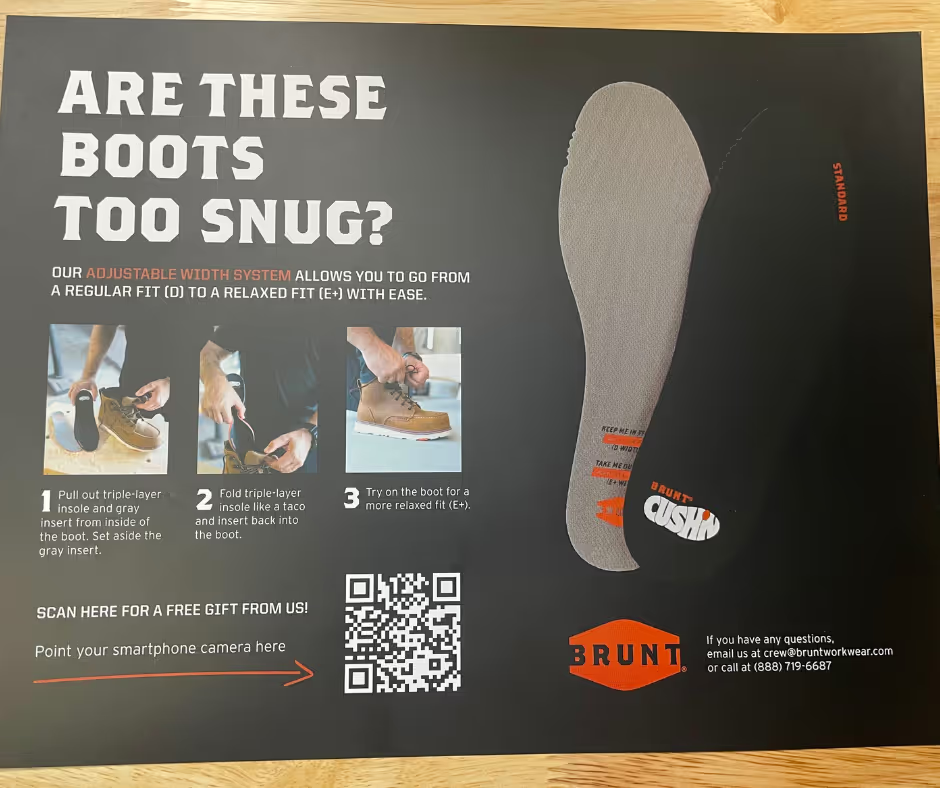
This simple value exchange resulted in a 90%+ scan-to-email registration rate and over 1.3 million total Brij experience engagements. By turning offline transactions into direct interactions, Brunt captures the data needed to serve relevant, well-timed offers that drive repeat purchases.
2. Offer seamless product registration and warranty support
Acquiring a buyer for a single transaction gives you a low return on investment, particularly in the durable goods space. If a customer buys your product on Amazon or at a big-box retailer and you never hear from them again, you miss out on the entire customer lifecycle. Product registration and warranty activation are prime opportunities to build a relationship.
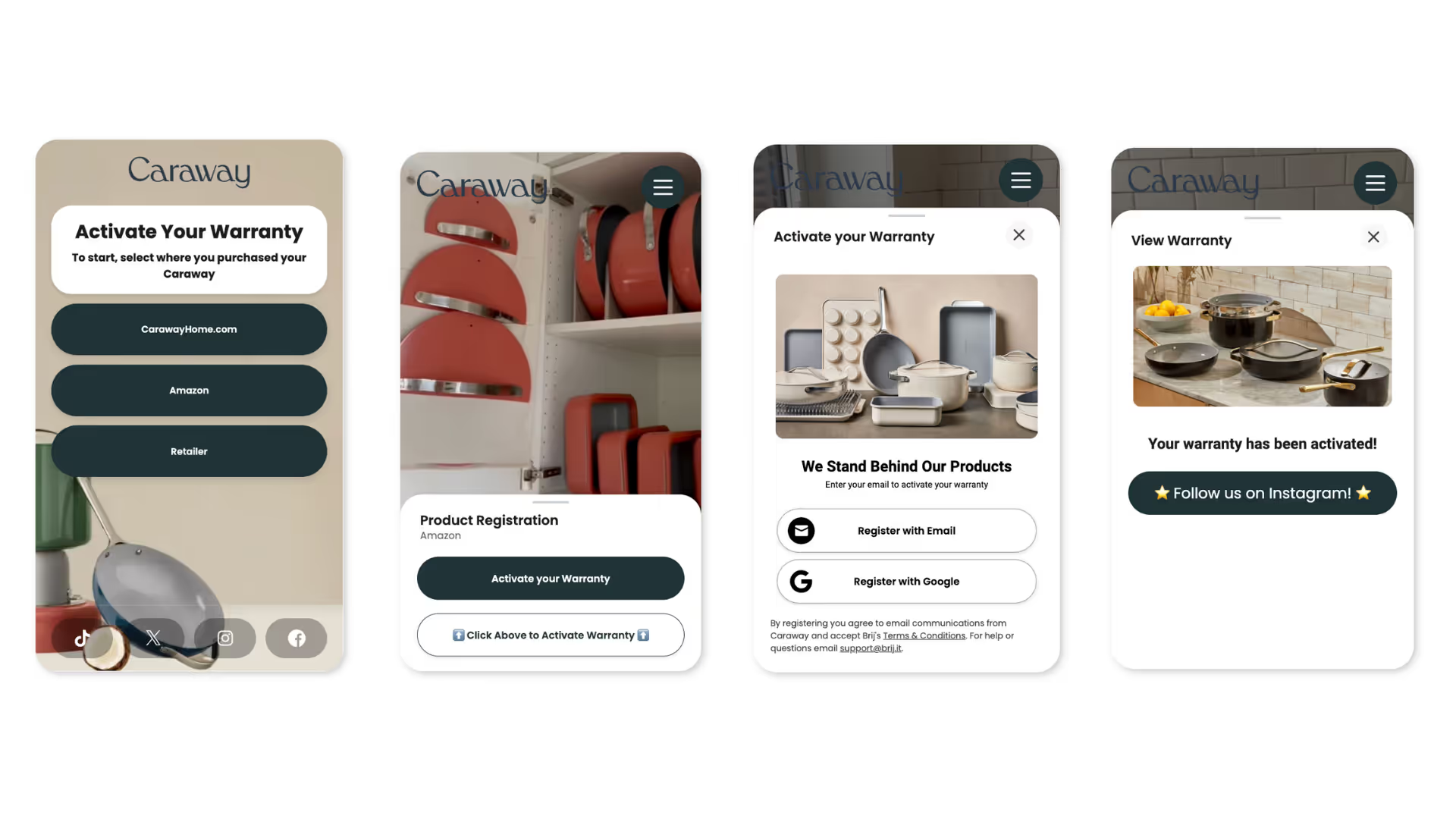
Caraway, the popular non-toxic cookware brand, wanted to better engage customers purchasing through Amazon and retail channels. They partnered with Brij to build a digital hub accessed via a QR code insert in the packaging. Customers could easily activate their product registration (selecting where they purchased it) and access warranty support.
The result? A 52% average scan-to-registration rate and over 133,000 registrations from previously unidentified customers. This frictionless experience not only provides peace of mind for the customer but also opens the door to deeper relationships and future upsells.
3. Encourage repeat business through product education
Another way to keep customers coming back is through education.
When a buyer fully understands how to get the maximum value out of a purchase, they are much more likely to become a repeat customer. Providing clear, accessible guidance on how to use, maintain, or creatively apply a product transforms a basic transaction into an ongoing relationship. If a brand can step in as a helpful guide right when the package is opened, they lay the groundwork for long-term loyalty.
Momofuku faced this challenge as they expanded into retail and Amazon. They wanted to educate customers that they sell more than just Chili Crunch and showcase their diverse product offerings. Brij attached QR codes linking to unique digital experiences on Momofuku’s best-selling products. Each experience featured product-specific recipes and a free recipe cookbook download in exchange for an email.
By teaching people how to get the most out of what they bought, Momofuku drove 170,000+ scans and generated $24,000+ in incremental DTC revenue. The more confident and capable customers feel in the kitchen, the more likely they are to stick around and spend more.

4. Collect feedback to improve the customer experience
You can’t retain customers if you don’t know what they love – or what frustrates them – about your product. Gathering structured feedback is essential for continuous improvement, but relying on organic support tickets often means you only hear from the most upset customers.
Nestig, a modern nursery essentials brand, used Brij to embed a dynamic, customer-first experience directly into their assembly journey. By placing QR codes on the front page of every assembly manual, they transformed a static document into an interactive support hub. This allowed them to capture valuable feedback precisely when customers were interacting with the product.
.png)
Similarly, PackIt leveraged Brij to capture SKU-level intelligence across national retail. By offering a discount in exchange for survey completion, they were able to identify the "average buyer" for each product, quantify purchase drivers (like food safety vs. quality), and map discovery channels. This transition from basic data capture to structured, scalable retail intelligence empowers brands to refine their products and messaging, ultimately leading to higher retention.
.png)
5. Drive retail velocity with digital rebates
Sometimes, retaining a customer means ensuring they buy your product again the next time they are at the grocery store. Traditional paper coupons are clunky and offer zero data back to the brand. Digital rebates solve this by incentivizing repeat retail purchases while capturing customer data.
Cann, the cannabis-infused social tonic, wanted to quickly launch rebate campaigns to boost retail velocity and distribute them through their paid media strategy. Partnering with Brij, they launched SMS-based rebate experiences via links in paid social ads and their Instagram link-in-bio.

Customers simply purchase the product in-store, text a picture of their receipt, and receive cash back via Venmo. This frictionless process drove a 30% scan-to-registration rate and over 200,000 engagements across their experiences, turning one-time retail triers into repeat buyers.
6. Create excitement with sweepstakes
Introducing an element of chance and play into the post-purchase journey is a highly effective way to capture attention. When brands build interactive campaigns that offer the possibility of winning a prize, it gives shoppers a compelling, immediate reason to connect. This interactive approach transforms a passive unboxing moment into an active, memorable engagement that encourages ongoing participation.
Take Health-Ade Kombucha, for example. To generate excitement for their SunSip product in a crowded market, they used Brij to execute nationwide sweepstakes campaigns directly from their packaging. Customers scan the QR code to enter the sweepstakes, while also receiving product education and loyalty sign-up prompts.
This strategy drove over 40,000 sweepstakes entries and $7,000+ in monthly incremental revenue from Brij experiences. When a purchase comes with the possibility to win, it elevates the entire experience from transactional to memorable, and that emotional connection is what drives repeat engagement.
.png)
7. Bridge offline events to online communities
Live events and out-of-home (OOH) activations are fantastic for building visibility, but they often fail to capture the attendees' information for future retention efforts.
Turtlebox, the ultimate outdoor speaker brand, frequently hosts event activations at stadiums and festivals. To ensure these offline interactions translated into long-term relationships, they utilized Brij QR codes at their event booths. Attendees could scan to register their products, learn more, or enter giveaways.
.png)
This strategy yielded a 56% scan-to-registration rate and over 20,000 engagements. By bridging the offline event to an online digital experience, Turtlebox successfully turned casual event-goers into a tight-knit, reachable community. Since launching with Brij, Turtlebox has seen 1.2M+ total engagements, showcasing high customer interest across retail and event activations and $40,000+ in DTC revenue, generated from newly registered customers purchasing accessories and additional products.
8. Simplify reordering and subscriptions
Designing a frictionless replenishment system is one of the most effective ways to lock in long-term loyalty. By making it effortless for shoppers to restock, you shift your focus from constant acquisition to automated retention.
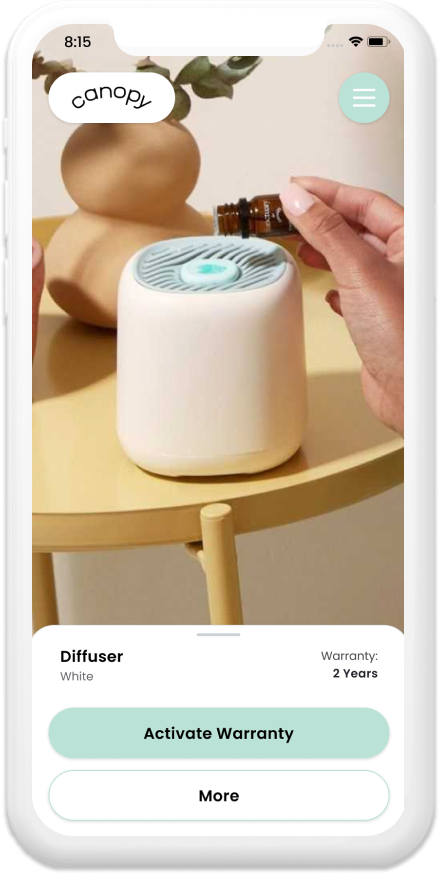
Canopy, known for their innovative humidifiers, leveraged Brij's platform to allow customers to easily register their warranty and, crucially, order replacement filter subscriptions with a simple scan.
This frictionless path to reordering resulted in a 60% scan-to-registration rate, a 20% increase in average order value (AOV) for new customers, and an 85-90% subscription rate on their filters. When you make it incredibly easy for a customer to replenish the product they already love, retention becomes a natural byproduct of a great user experience.
Start Using Customer Retention Strategies That Work
Whether you leverage interactive digital rebates, robust educational content, or frictionless product registration, prioritizing post-purchase engagement is essential for sustainable growth.
Companies that actively cultivate long-term relationships – regardless of whether customers bought on Shopify, Amazon, or Target – will ultimately outpace their competition.
If you’re looking to turn every unknown shopper into a known customer and accelerate business growth with omnichannel customer retention, book a demo with Brij today.