Table of Contents

How to Increase Rebate Conversion Rates: Best Practices for Brands

- First-party data consists of consented, proprietary customer information collected through owned channels, providing high accuracy, low privacy risk, and exclusive competitive advantage.
- Rising customer acquisition costs, retail channel data ownership, and third-party cookie deprecation make direct customer relationships and first-party data essential for sustainable growth and marketing effectiveness.
- First-party data enables personalized marketing, improved attribution, increased customer lifetime value, and real-time behavioral insights, with measurable impacts on revenue growth and cost efficiency.
- Brij converts offline retail interactions into digital relationships by capturing and activating first-party data, enabling omnichannel visibility and direct customer engagement.
For consumer brands, driving in-store velocity is only half the battle. The real challenge lies in turning those anonymous retail transactions into known, measurable customer relationships.
Traditional promotions and coupons often discount the sale without capturing any data, leaving brands in the dark about who bought their product and why.
Rebate campaigns offer a powerful alternative. By incentivizing customers to interact with your brand after purchase, rebates create a direct connection, capture first-party data, and build a foundation for long-term loyalty.
However, simply launching a rebate isn't enough. To maximize conversion rates and ensure your campaign drives meaningful growth, you need a strategic approach to distribution, offer design, and post-purchase engagement.
The Power of a Post-Purchase Value Exchange
Unlike point-of-sale discounts, rebates introduce a deliberate post-purchase moment. Customers actively engage with the brand in exchange for value, typically by submitting a receipt. This process allows brands to capture verified phone numbers, emails, and purchase data, turning unknown shoppers into known customers.
This data is invaluable for future retargeting and lifecycle marketing. Furthermore, rebates work across any retailer or channel, meaning you aren't dependent on complex retailer systems or approvals. You can promote your offer via QR codes on packaging, social media ads, or in-store displays, maintaining full control over the customer experience.
Optimizing Distribution Points for Maximum Reach
How customers discover your rebate campaign is just as important as the offer itself. A compelling rebate buried in a hard-to-find location will inevitably underperform. To maximize conversion rates, brands must deploy a multi-channel distribution strategy that captures both physical and digital traffic.
Physical Distribution: The Power of QR Codes
In-store and on-pack placements are critical for capturing high-intent shoppers at the point of decision.
- On-Pack QR Codes:
- Placing a prominent QR code directly on your packaging or product ensures that every customer who picks up your product sees the offer.
- The QR code should be at least 0.75" in size and feature clear contrast to ensure easy scanning.
- Shelf Talkers and Endcaps:
- Utilize in-store signage to draw attention to the rebate before the customer even reaches the product.
- Register Displays and Product Inserts:
- Additional physical touchpoints can reinforce the message and provide a final nudge to purchase
Best Practices for Physical CTAs:
The call-to-action (CTA) accompanying your QR code must be clear, benefit-led, and create a sense of urgency. Avoid vague language. Instead, use proven phrases such as:
- "Scan to get $X back on your purchase."
- "Try it risk-free – claim your rebate now."
- "Buy today, get $X back. Scan to redeem."
Digital Distribution: Scaling with Short Links
While physical placements capture in-store traffic, digital channels are essential for driving awareness and scaling your campaign.
- Paid Social and Digital Ads: Use targeted ads on platforms like Meta to reach your ideal audience. Direct traffic to your rebate landing page using a digital short link.
- Email and SMS Campaigns: Promote the rebate to your existing subscriber base to encourage repeat purchases or trial of new product lines.
- Influencer Content: Provide influencers with unique tracking links to share with their followers, allowing you to measure the performance of individual partnerships.
- Website Banners and Link in Bio: Ensure the offer is visible across all your owned digital properties.
The Golden Rule of Distribution:
Always use both a QR code for physical placements and a short link for digital channels. Relying on only one method effectively cuts your potential reach in half. Ensure your messaging is consistent across every channel. A customer should see the exact same offer and CTA whether they encounter the campaign on an Instagram ad or a shelf talker.
Crafting Offers That Convert
Even with perfect distribution, a rebate campaign will fail if the offer itself is unappealing or confusing. The design of your offer directly impacts your initiation and submission rates.
Keep It Simple and High-Value
The most effective offers are those a customer can understand in under five seconds. Complex eligibility rules or confusing tiers will cause significant drop-off.
When structuring your offer, prioritize high perceived value.
- Dollar Amounts Over Percentages: Consumers respond better to concrete savings. An offer of "$3 back" will consistently outperform "15% off."
- The Power of "FREE": "Buy One Get One Free" or "100% Cash Back" are incredibly compelling. "FREE" is the single highest-performing word in rebate CTAs.
- Avoid Low-Value Friction: An offer of "$1 back" often creates too much friction for the customer to bother submitting a receipt. Ensure the reward justifies the effort
Precision in Purchase Requirements
Ambiguity is the enemy of conversion. You must explicitly define the qualifying products, eligible retailers, and any regional restrictions. Misaligned SKUs or confusion over which stores are participating are the top causes of customer frustration and support tickets.
Ensure that your Brij experience clearly states these limitations and exclusions. The messaging on the landing page must perfectly match what the customer saw on the physical display or digital ad. Any inconsistency creates doubt and reduces the likelihood of submission.
The Brij Advantage: Seamless Execution and Measurement
Launching a successful rebate campaign requires a frictionless customer experience from scan to payout. Brij simplifies this process, allowing brands to build, launch, and measure campaigns with ease.
A Frictionless Redemption Flow
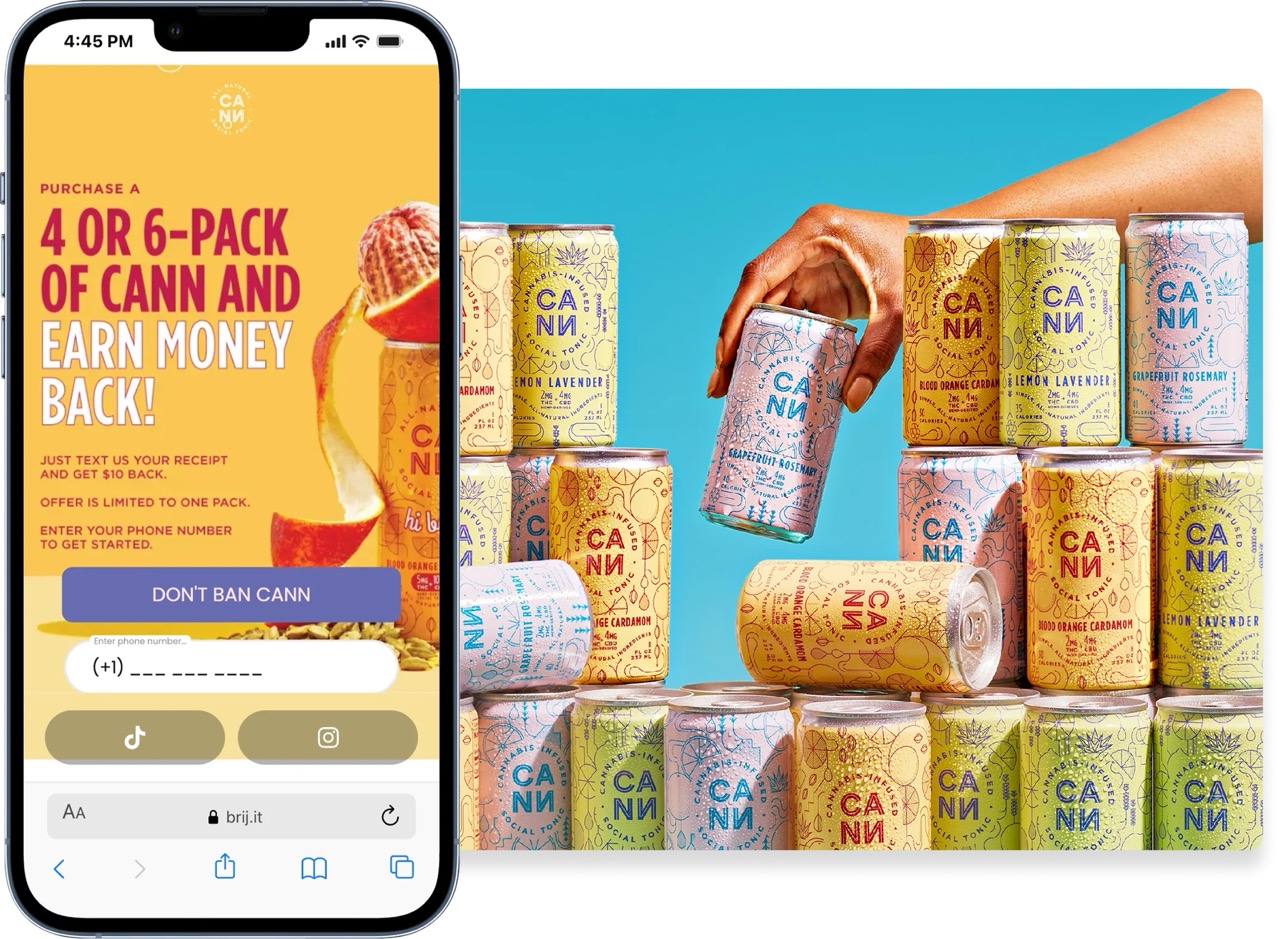
The Brij platform enables you to create a mobile-optimized redemption flow that minimizes drop-off. Customers can easily opt-in via SMS or email, upload their receipt, and receive their payout quickly.
- Test Before You Launch: Always walk through the complete customer journey yourself before going live. Scan the QR code, submit a test receipt, and verify the confirmation messages.
- Enable Reminders: Utilize Brij's automated reminder messages to nudge customers who started the signup flow but didn't complete their submission.
Measuring Success with Brij Analytics
Real-time data is crucial for optimizing your campaign. Brij Analytics provides visibility into every stage of the funnel, allowing you to identify bottlenecks and adjust your strategy.
Monitor key metrics such as:
- Scans/Clicks: Measures top-of-funnel health and distribution effectiveness.
- Initiations: Indicates the strength of your CTA and the initial appeal of the offer.
- Submissions: Reflects the ease of the receipt upload process.
- Approvals: Measures receipt quality and the clarity of your offer eligibility rules.
- Payouts: Direct budget spent on offering consumer refunds.
What's Next: Turning Redemptions into Repeat Purchases
A completed rebate should not be the end of the customer journey; it should be the beginning of a direct relationship.
The true value of a rebate campaign lies in the first-party data you collect. Do not wait until the campaign ends to leverage this data.
Set up your SMS or email retargeting flows before launch so they trigger automatically. By re-engaging participants within 48 hours of their rebate approval, you can capitalize on their positive brand experience and drive immediate repeat purchases.
By combining strategic distribution, compelling offers, and automated retargeting, brands can transform rebate campaigns from simple promotional tactics into powerful, scalable growth engines.